


Zhen an Metallurgy
All types of Ferro Vanadium
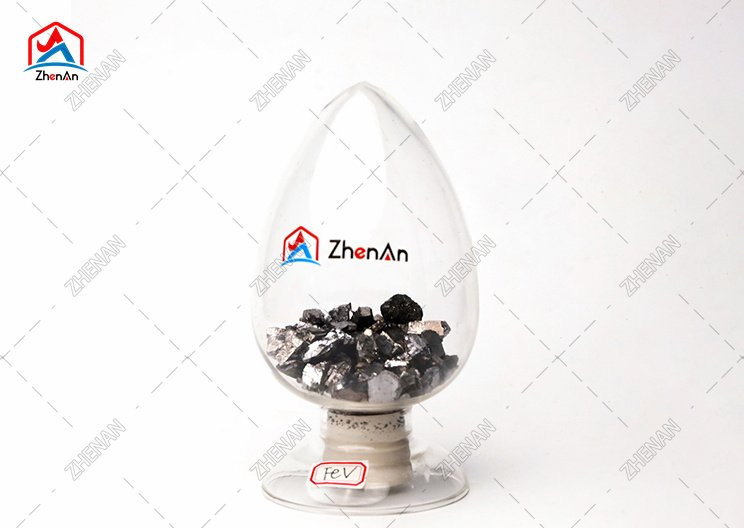
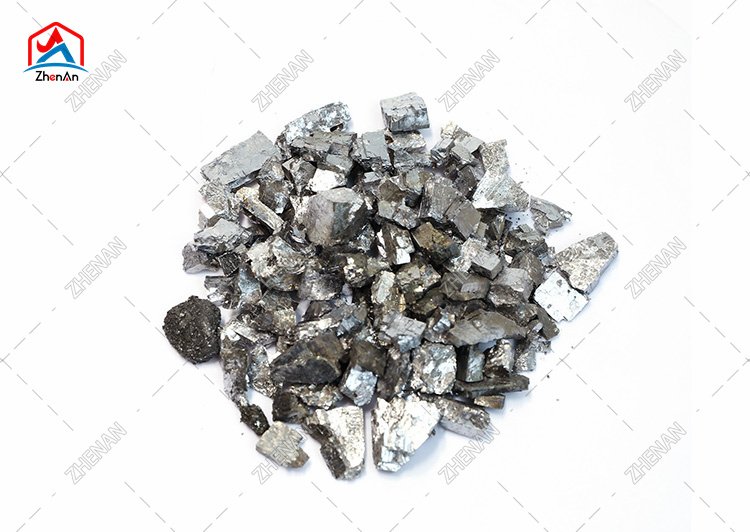
Zhen An Metallurgy provides you with ferrovanadium 40-80, can customize ferrovanadium with different content and shape, provides a full set of test certificates, supports third-party testing and free samples.
Content of certain elements can be customized
For the preparation of titanium alloy
Enhance the corrosion resistance of metal materials
Alloy Additives
Free Sample
high temperature stability
Introduction to Ferro Vanadium 50
Ferrovanadium 50 is a type of ferrovanadium alloy, commonly used in steel production. It is mainly composed of iron and vanadium, of which iron accounts for the majority and vanadium accounts for 50%. This alloy is often used as an additive to steel to improve the hardness, strength and wear resistance of steel.
In the steel industry, Ferrovanadium 50 is widely used to produce materials such as high-strength steel, high-speed steel, tool steel and stainless steel. By adding Ferrovanadium 50, the properties of steel can be significantly improved, making it more suitable for various engineering and manufacturing fields
Chemical Composition of Ferro Vanadium 50
The chemical composition of Ferro vanadium 50 is crucial to its performance and applications. Here’s a detailed breakdown of its components:
| FeV composition (%) | |||||
| Grade | V | Al | P | Si | C |
| FeV50-A | 48-55 | 1.5 | 0.07 | 2.00 | 0.40 |
| FeV50-B | 48-55 | 2.0 | 0.10 | 2.50 | 0.60 |


Production Process of Ferro Vanadium 50
The process of producing ferrovanadium 50 generally includes the following steps:
- Ore beneficiation: First, vanadium is extracted from the ore containing vanadium. Vanadium is mainly found in vanadium ores such as vanadium titanomagnetite and vanadium iron ore.
- Oxidation: The extracted vanadium ore usually needs oxidation treatment to convert the vanadium in it into oxide form.
- Reduction: The oxidized vanadium material is mixed with iron ore or other iron sources and then reduced at high temperatures. This step is usually done in an electric furnace or blast furnace.
- Refining: The resulting alloy is refined through processes such as smelting and melting to ensure that the vanadium content in the alloy reaches the required level.
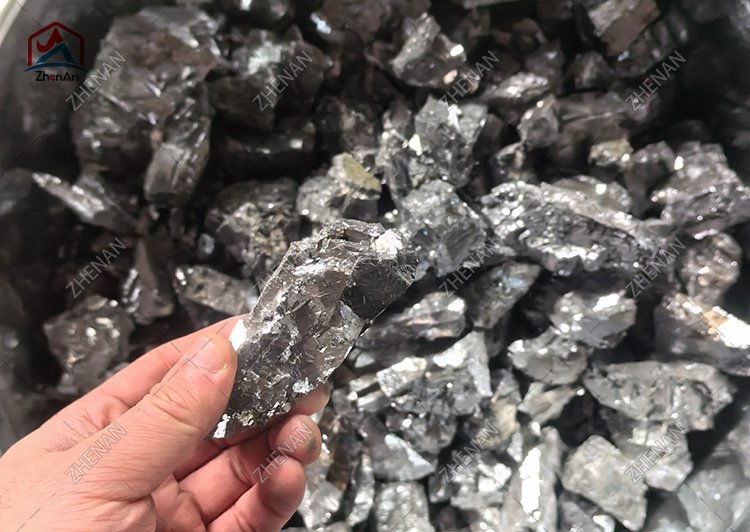
- Forming: The resulting ferro vanadium 50 alloy is formed and usually sold in block or granular form.
The entire production process requires strict control of parameters such as temperature, chemical reaction and material ratio to ensure that the final ferro vanadium 50 alloy that meets the specifications is produced. This alloy has important applications in steel production and other industrial fields, so the quality and efficiency of the production process are crucial.
Advantages and Characteristics of Ferro Vanadium 50
- High vanadium content: With a vanadium content of 50%, Ferro vanadium 50 provides a large amount of vanadium in the alloy composition.
- Enhanced strength: When used as an additive, Ferro vanadium 50 can increase the strength of steel, making it suitable for applications that require high tensile strength and durability.
- Enhanced Hardenability: It enhances the hardenability of steel, allowing for better heat treatment and achieving the desired mechanical properties.
- Improved Wear Resistance: Ferrovanadium 50 can improve the wear resistance of steel, making it suitable for applications where wear resistance is critical.
- Better Weldability: It can improve the weldability of steel, making it easier to use in manufacturing and construction processes.
- Increased Corrosion Resistance: Adding Ferrovanadium 50 can improve the corrosion resistance of steel, making it more durable in harsh environments.
These advantages make Ferro vanadium 50 an indispensable material in modern steel production, contributing to the creation of high-quality steel products across various industries.

Applications of Ferro Vanadium 50
Due to its ability to improve the performance of steel, Ferrovanadium 50 is used in various industries. Some common applications include:
- Alloy additive: It is an important alloy additive in the steel industry that can improve the strength, toughness, ductility and heat resistance of steel. High-strength low-alloy steel (HSLA) containing ferrovanadium is widely used in the production and construction of oil/gas pipelines, buildings, bridges, rails, pressure vessels, carriage frames, etc. due to its high strength.
- Aerospace applications: In non-ferrous alloys, it is mainly used to produce vanadium-titanium-iron alloys such as Ti-6Al-4V, Ti-6Al-6V-2Sn, and Ti-8Al-1V-Mo. Ti-6Al-4V alloy is an excellent high-temperature structural material for manufacturing aircraft and rockets, and titanium vanadium ferroalloy production accounts for more than half. Ferrovanadium metal can also be used in magnetic materials, cast iron, hard alloys, superconducting materials and nuclear reactor materials.
- Steelmaking industry: Mainly used as an alloy additive for steelmaking. Adding ferrovanadium to steel can significantly improve the hardness, strength, wear resistance and ductility of steel, and improve the cutting performance of steel. Ferrovanadium is commonly used in the production of carbon steel, low alloy steel, high alloy steel, tool steel and cast iron.
- Metallurgical industry: suitable for alloy steel smelting, alloy element additives and stainless steel welding rod coating. Suitable for the production of niobium pentoxide concentrate as a steelmaking raw material or casting additive, welding rod as an alloying agent, magnetic materials and other uses of ferrovanadium.
- Automobile industry: Ferrovanadium 50 is used to manufacture parts for the automotive industry, such as engine parts, gears and axles, which require high strength and wear resistance.
- Cutting tools and structural components: used in the production of cutting tools in machining and metalworking processes; used in the construction industry to produce high-strength steel bars and structural components
These applications highlight the versatility and importance of Ferrovanadium 50 in improving the performance and durability of steel in various industrial sectors, helping to produce high-quality materials suitable for a wide range of applications.